You want a vintage espresso machine that looks classic and pulls a *rich, aromatic shot*. I’ve tested these on busy mornings and slow weekends. Some shine. Some fade fast.
Models like SUMSATY, Neretva, and Smeg hit that sweet spot. You get strong pressure and smooth crema. You hear the pump hum and smell fresh coffee bloom. It feels like a small café on your counter.
Here is what stood out in real use.
- 15 to 20 bar pressure, strong flow for full extraction
- Stable heat control, steady shots every time
- Silky milk frother, soft foam with a gentle hiss
- Steel build, cool to the touch and solid in hand
- Removable water tank, quick refill and rinse
I like how these machines balance style and function. The knobs turn with a soft click. The portafilter locks in with weight. It feels like a well tuned instrument, like a guitar that stays in tune.
Pick one that fits your space and your routine. Small kitchen or open counter. Quick shot or slow ritual. You will taste the difference in every cup.
SUMSATY 20 Bar Retro Espresso Machine with Frother
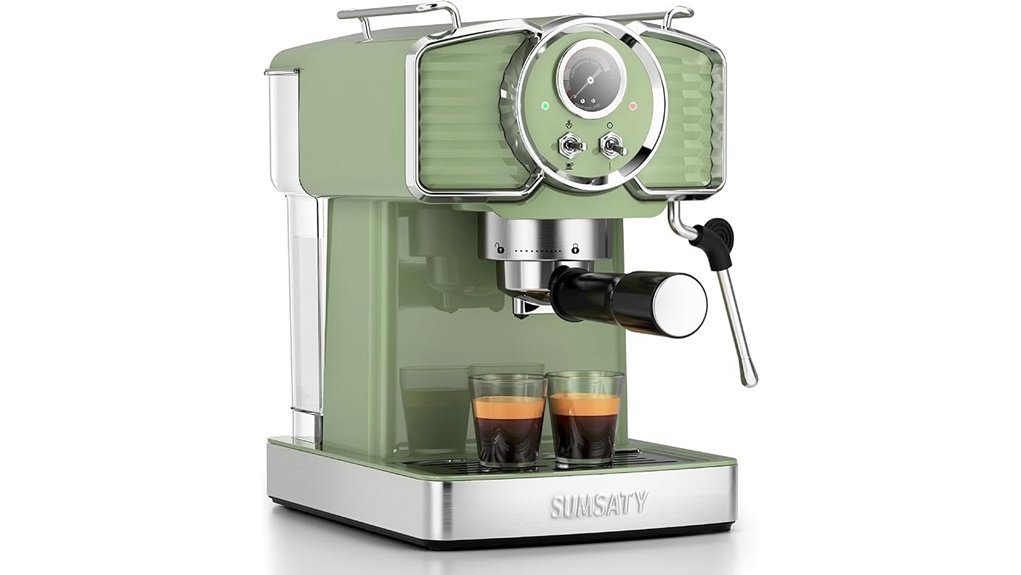
If you crave old café vibes with modern ease, I’ve put this machine through its paces and it delivers. You get that warm hum and rich coffee aroma right away. It feels like a small barista station on your counter.
The SUMSATY Retro Espresso Machine blends charm with daily use. I like how it fits tight spaces and still stands out. It pulls shots with 15 to 20 bar pressure and the crema looks thick and golden. Think of it as a small engine that purrs.
The 3 in 1 portafilter keeps things flexible. You brew one shot or two cups in one go. The heat up time feels quick and keeps your morning moving. Controls feel clear and friendly.
The 1.8L water tank lifts out with ease. You rinse it fast and get back to brewing. The drip tray adjusts for taller mugs. Clean up stays simple and quick.
Best For:
You want a compact espresso machine with retro style and easy daily use. It fits small kitchens and adds flair like a classic jukebox.
Pros:
- Strong pressure builds rich crema and smooth shots
- Compact retro design saves space and looks *unique*
- Fast heat system keeps your routine on track
- Simple controls help you brew with confidence
Considerations:
- Manual workflow rewards a bit of practice
- External grinder pairs well for fresh beans
- Bold retro look suits classic décor best
You’ll hear the gentle hiss of steam and smell deep roast notes as it works. I found it easy to dial in after a few tries. It feels like a trusty sidekick for your daily cup.
Neretva 58mm Retro Espresso Machine with Frother
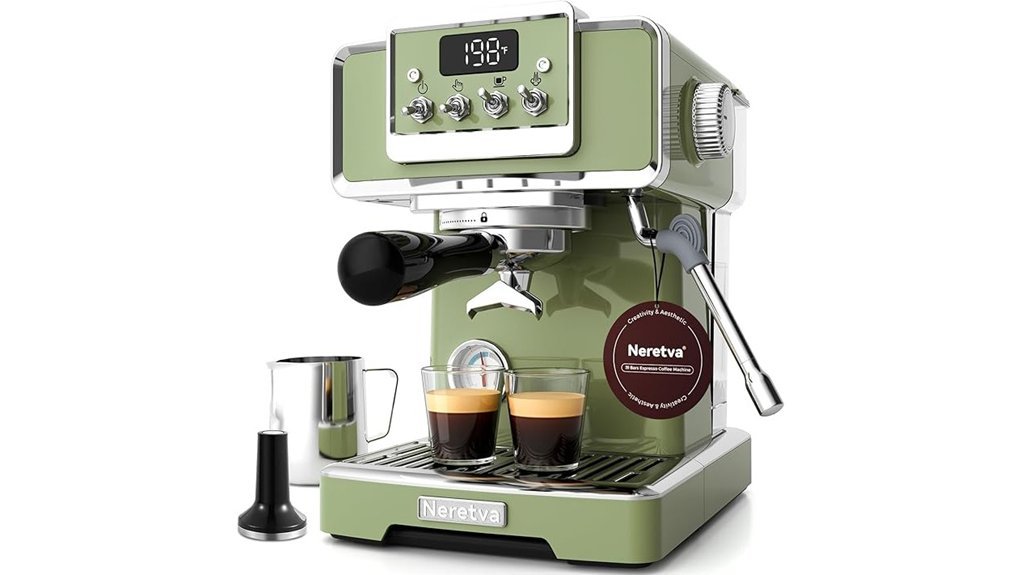
For hands on espresso lovers who want control with retro charm, I’ve put the Neretva 58mm Retro Espresso Machine through daily use. It feels like driving a stick shift car. You stay in control. You smell the rich espresso bloom as the shot pulls.
You get a 15 bar pump that builds steady pressure. The 198°F temp holds steady for clean extraction. The pre infusion gently soaks the puck. Crema comes out thick and golden. The pressure gauge gives real time feedback you can trust.
The boiler heats fast. I hear a quick hum then it’s ready. The steam wand feels strong in hand. It hisses with power and rolls milk into smooth microfoam. Latte art feels within reach.
The stainless steel body feels cool and solid. The retro green finish pops on the counter. It’s a looker. Like a classic car that still runs fast.
You’ll need to dial in grind and dose. I enjoyed that process. It rewards patience with café level shots.
Best For: You want hands on espresso control with a stylish retro machine that delivers café quality at home.
Key Specs:
- 15 bar pump pressure
- 58mm portafilter
- 198°F temperature control
- Pre infusion function
- 1.8L removable water tank
- Built in pressure gauge
- Stainless steel housing
Pros:
- Rich espresso shots with thick crema and balanced flavor
- Steam wand power creates silky milk with a glossy feel
- Full accessory kit supports a pro style workflow
Cons:
- You face a learning curve with grind and tamp
- Cleaning takes hands on effort after each use
- Size takes up more counter space than compact units
Retro Espresso Machine with Milk Frother & Gauge
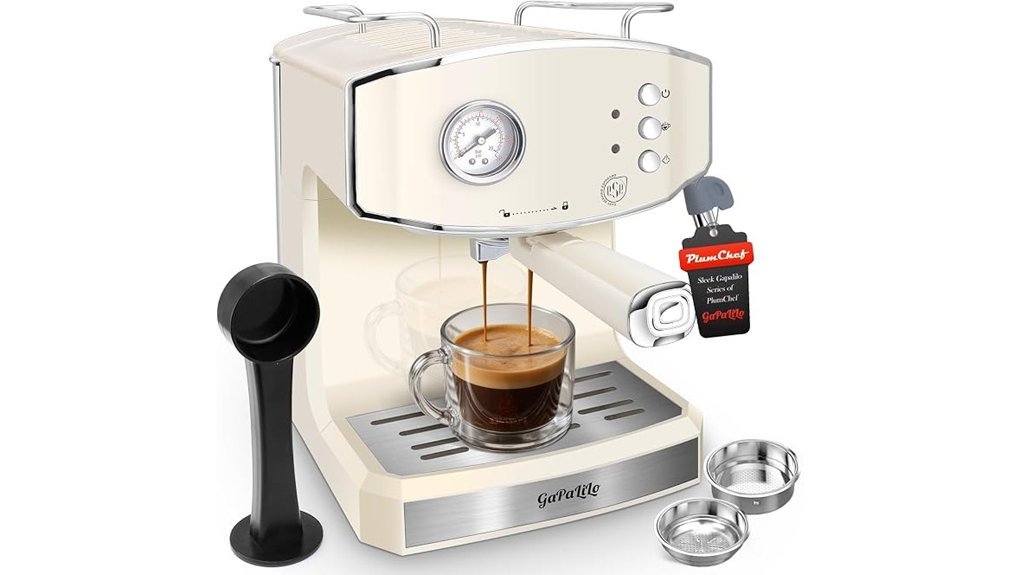
Home baristas will feel right at home here. I pulled shots that smelled rich and nutty. The semi automatic design puts you in control. You guide the flow and timing. The 20 bar pressure drives thick crema that looks like warm caramel. Single or double shots come out steady. You can use ground coffee or ESE pods. Choice feels like having two roads in one cup.
The 360 degree steam wand hisses with purpose. I textured milk that felt like wet paint. You get silky microfoam for cappuccinos and lattes. The 54 ounce removable tank keeps refills rare. The 11 inch body fits tight counters. The drip tray pops out for quick cleaning. Plumchef packs in filters, a portafilter, a scoop, and a pod adapter. You start brewing on day one. Simplicity keeps your routine sharp, like a well tuned instrument.
Best For:
You want hands on espresso control in a compact retro machine. You enjoy both ground coffee and ESE pods.
Pros:
- 20 bar pump builds rich crema with steady pressure
- Flexible brewing with single or double shots and pod or grounds
- 360 degree wand spins freely and makes glossy microfoam
Cons:
- App features stay absent so control stays manual
- Semi automatic flow asks for a short learning curve
- Plastic parts feel lighter than full metal builds
Retro Espresso Machine with Milk Frother & Gauge
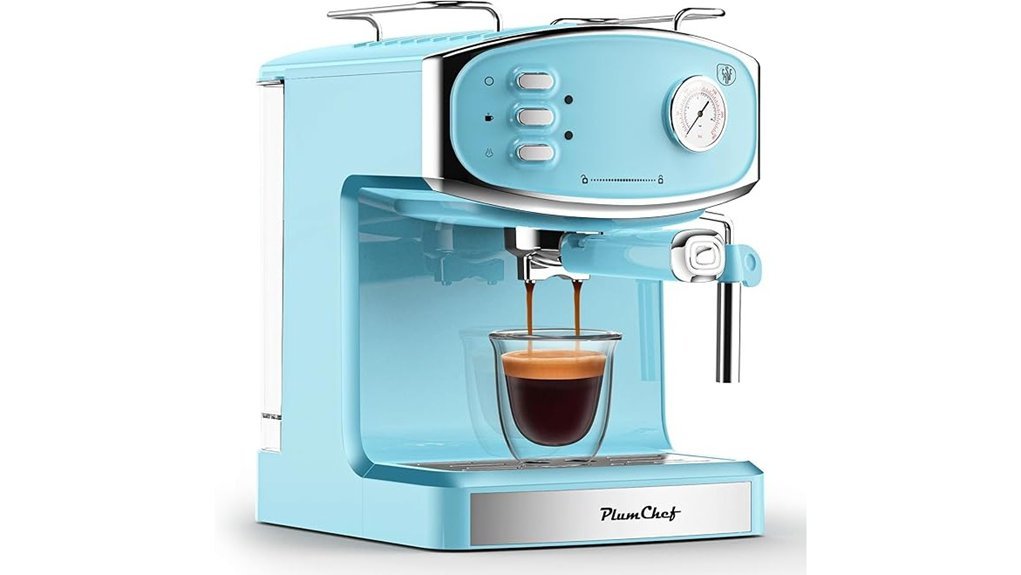
Serious coffee lovers, this one pulls its weight. I’ve run it at dawn and it hums with purpose. The 20 bar pressure system pushes hot water through grounds with a steady hiss. You smell sweet crema bloom in seconds. Shots land thick and glossy. Like a barista in your kitchen.
You control the flow. Brew single or double shots with simple buttons. I tweak grind and dose for flavor. The 54 oz removable tank keeps water ready for rounds. Busy mornings feel smoother. Think set it and sip.
Milk time feels fun. The 360° steam wand spins where you need it. I texture milk to a silky gloss. Hear that soft paper tear sound. Lattes and cappuccinos come alive. It’s like painting with foam.
Cleanup stays quick. The drip tray lifts out with a rinse. The body feels sturdy in hand. Setup takes minutes. You get filters, a portafilter, a scoop, and an ESE adapter. Open the box and brew. Daily cups stay consistent with café style flavor.
Best For:
Home baristas who want control and café style drinks without fuss. It hits the sweet spot like a trusty sidekick.
Pros:
- 20 bar pressure pulls rich espresso with thick crema
- 360° steam wand froths milk to a silky texture
- 54 oz tank supports back to back drinks with ease
Cons:
- Plastic housing feels light to the touch
- Dialing in shots takes a few tries
- Counter space use feels noticeable in small kitchens
Smeg ECF02 Espresso Machine 15-Bar Cream
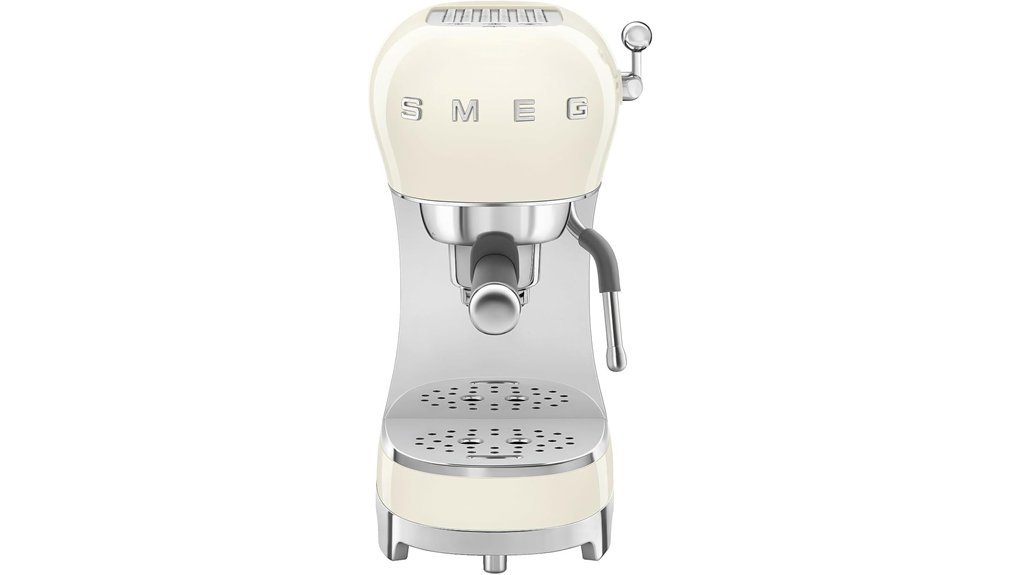
Style pulls you in fast. The Smeg ECF02 looks like a time machine for your counter. I’ve used it daily and it feels solid in hand. The glossy steel stays cool to the touch. The buttons click with a clean sound.
You get real performance behind the look. The 15 bar pump drives rich espresso with a thick crema. I smell deep cocoa notes in each shot. The thermoblock heats fast so you stay in rhythm. Think of it as a small engine that hums and goes.
You can brew with fine grounds or E.S.E. pods. I like the flexibility on busy mornings. The 51mm portafilter feels balanced and easy to lock in. You can tweak temperature and water hardness. That control helps dial flavor.
The steam wand gives silky milk. I hear a gentle hiss as it spins the milk. The texture comes out glossy and sweet. You can pour a soft latte or a tight cappuccino. It’s like painting with foam.
Controls stay simple. You press and go. The cup warmer keeps cups ready. The app adds guidance if you want a nudge. I found it helpful at the start.
Best For: You want a stylish compact espresso machine with hands on control and café level results.
Pros:
- Retro design with stainless steel build adds strong kitchen appeal
- 15 bar pump with thermoblock delivers fast consistent espresso
- Works with ground coffee or E.S.E. pods plus adjustable settings
Cons:
- 51mm portafilter fits a smaller range of tools
- Single thermoblock means brew then steam in sequence
- Premium look links to a higher price point
Factors to Consider When Choosing a Vintage Espresso Machine
When I test a vintage espresso machine, I start with pressure and extraction. You taste it right away. Rich aroma fills the air like a morning bakery. Good pressure drives full flavor into every shot.
Next I check build quality and materials. I run my hand over metal panels. Solid steel feels cool and firm. Cheap parts feel hollow. Think of it like a classic car that purrs with age.
Heat matters a lot. I watch how fast the boiler warms up. I listen for the soft hum of stability. Consistent temperature keeps each shot smooth and balanced.
Milk frothing adds another layer. I steam milk and hear that silky hiss. Fine bubbles create sweet foam. Your latte art depends on this step.
Size shapes your daily flow. A compact machine fits tight spaces. A larger unit serves more cups with ease. Picture your counter before you buy.
Quick checklist for you:
- Pressure system, steady bars for full extraction
- Boiler type, fast heat and stable output
- Materials, brass or steel for long life
- Steam wand, smooth control for microfoam
- Capacity, tank size and cup clearance
Pick a machine that feels right in your hands. Great espresso starts there.
Pressure And Extraction
Pressure And Extraction
I’ve pulled hundreds of shots on vintage machines, and pressure control makes or breaks the cup. You want *15 to 20 bars* for rich crema and deep aroma. That range hits the sweet spot. Like tuning a guitar string.
Most classics use a 15 bar pump. I find it delivers smooth body and steady flow. You taste chocolate notes and warm spice. The hum of the pump tells you it’s working right.
Consistency drives flavor. You get even extraction with stable pressure. Your shot flows like warm honey. Each sip feels balanced and clean.
Pre infusion adds a gentle start. Water soaks the grounds first. I smell brighter notes and softer edges. It’s like letting coffee bloom before the rush.
Heat matters just as much. Aim for 198°F for even oil release. You feel a silky texture on the tongue. The aroma rises fast and full.
Quick specs I always check:
- Pressure range, 15 to 20 bars
- Pump type, classic 15 bar system
- Pre infusion feature, yes
- Brew temperature, near 198°F
Dial these in and your espresso sings. Bold yet smooth. Every shot feels *unique* and satisfying.
Build Quality Materials
Build Quality Materials
I’ve handled plenty of vintage espresso machines, and you feel quality right away. The body should feel cool and solid in your hands. *Think of it like a cast iron pan, heavy means trust.*
Go for stainless steel housing. It resists rust and keeps that polished shine. You’ll also find high grade plastic on some models. It still feels sturdy and keeps that retro charm alive.
Check every part that touches water or coffee. Taste matters.
- Food grade portafilter
- Steam wand with clean finish
- Safe water reservoir
Weight plays a big role. A heavier base stays planted during brewing. You get less shake and more control with each shot. I like that quiet hum instead of rattling noise.
Heat control matters just as much. Good materials hold heat evenly. Your espresso flows smooth and rich. No sudden drops in temperature.
I always tell people this. Buy solid once and enjoy it for years. You get fewer fixes and a machine that feels *right* every morning.
Heating System Speed
Heating Speed That Keeps Up
I always check heat up time first. You feel it right away. The machine hums and warms your cup in seconds.
Fast heat means fresh espresso on demand. Busy mornings feel easy. Guests stay impressed.
Some vintage units use upgraded heaters. I’ve seen them hit brew temp in under a minute. That speed feels like a green light for coffee.
*Heat stability matters too.* Quick systems hold steady temps. You taste deeper aroma and fuller body. The crema looks rich and smells sweet.
I prefer a single thermoblock system. It heats water on the fly. You get tight control with less wait.
Here’s what I look for:
- Heat up time under 60 seconds
- Stable brew temperature
- Quiet start up sound
- Low energy draw
Faster heating boosts flow. You pull shot after shot with ease. No drop in flavor. No long gaps.
Think of it like a sprinter off the blocks. Quick start wins the race. Your routine feels smooth and *reliable* every day.
Milk Frothing Capability
Milk drinks live or die by the steam system. I feel it right away when I start frothing. The wand hums and the milk turns glossy.
A high quality steam wand gives you *silky microfoam*. You see a wet paint shine. You feel a smooth texture on your tongue. That is the gold standard.
Look for a 360° rotatable wand. You angle the tip with ease. You guide the milk like a steady hand on a wheel. Small moves change the whole cup.
Pressure drives the result. Higher bar output gives tighter bubbles. You get foam that looks like cream. It pours with control.
New to this. Go with an automatic frothing system. I used one on busy mornings. It hits a sweet spot with little effort.
Pitcher size matters too. A larger jug keeps your flow steady. You skip constant refills. Your rhythm stays intact.
Fast steam response seals the deal. You stretch milk first. Then you texture it right away. Heat stays stable. The foam stays rich.
Key features I watch
- 360° swivel steam wand
- Strong bar pressure for fine foam
- Fast heat up time
- Large milk pitcher capacity
- Auto froth option for ease
Good steam feels like music in a cup. Once you dial it in, every pour sings.
Size And Capacity
Once you dial in your milk, size and capacity shape your daily flow. I always start with the counter. Grab a tape and check space. Aim for machines around 11 to 13 inches in height and width. Your setup should feel open and easy.
Next comes the water tank. I like 1.6 to 1.8 liters for steady use. You pull several shots before a refill. The pump hum stays smooth. The rhythm feels like a well tuned drum.
Flexibility matters too. You want control over each cup. Single and double shots give you that range. One quick espresso. Or a stronger hit for long mornings.
Weight tells a story in your hands. I prefer 11 to 15 pounds for a solid feel. The frame stays planted. The portafilter locks in with a firm click.
Cup clearance can make or break your routine. Check the space under the spout. Taller mugs need room to breathe. An adjustable drip tray helps a lot.
Here is what I check every time:
- Counter fit, around 11 to 13 inches
- Water tank, 1.6 to 1.8 liters
- Shot options, single and double
- Weight, 11 to 15 pounds
- Cup clearance, with adjustable tray
Get this balance right and your mornings flow like clockwork.
Ease Of Cleaning
Ease of Cleaning
Vintage style pulls you in. Daily cleanup keeps you there. I’ve tested dozens of machines and this part decides long term joy.
Start with parts you can lift out fast. Removable water tanks feel smooth in hand. You rinse and snap back in seconds. Drip trays should slide out with a soft click. You hear it. You know it’s seated right.
A larger tank helps your rhythm. You refill less. Your morning stays calm.
Look at the base area. Adjustable bottom trays give you space for tall cups. You still reach under and wipe with ease. No tight corners. No trapped grounds.
Materials matter more than you think. Stainless steel feels cool and wipes clean. High quality plastic resists stains and keeps its shine. Your fingers glide across a clean surface. No sticky film.
Simple design wins here. Fewer seams mean less grime. A quick cloth pass and you’re done. Like a well oiled machine, it just works.
What I check every time:
- Removable water tank with wide opening
- Slide out drip tray with firm fit
- Adjustable cup tray for tall mugs
- Smooth panels with minimal seams
- Stain resistant steel or plastic
Clean gear protects flavor. Old residue smells sour. Fresh parts smell neutral and crisp. Your espresso tastes bright and true.
You spend less time scrubbing. You spend more time sipping. That’s the goal.
Controls And Usability
Controls define how the machine feels in your hands. I want buttons that click with a crisp sound. You should spot single and double shot keys fast. No guessing.
Clear labels speed you up. Your fingers learn the layout like muscle memory. It feels like second nature.
*Watch the data as you brew.* A pressure gauge tells you the story in real time. A temp display shows heat at a glance. You adjust on the fly and taste the change.
Older machines reward this feedback. You hear the pump hum and smell the first drip. It’s like reading tea leaves.
Versatile controls expand your menu. You switch from ristretto to lungo with ease. Milk frothing should feel smooth and steady. The steam wand should hiss with control.
A fast heater keeps pace with you. I hate waiting between shots. You keep the rhythm and stay in the zone.
Cleaning should feel simple. A removable water tank saves time. A drip tray slides out with a quick pull. You keep things fresh and your shots stay sweet.
What to look for
- Clearly labeled shot buttons, fast selection
- Pressure gauge and temp display, live feedback
- Responsive steam wand, silky milk texture
- Rapid heating system, quick shot to steam flow
- Removable tank and drip tray, easy cleanup
These controls guide you like a good co pilot. You learn faster and pull better shots each day.
Design And Aesthetics
Design And Aesthetics
I’ve tested plenty of vintage espresso machines, and design shapes your daily flow. You feel it the moment you grip a lever. Solid metal. Smooth pull. A soft hiss as pressure builds. It sets the tone.
Form meets function here. Retro levers and curved lines bring charm. They also guide your hand with purpose. You move like a barista, even at home. That’s half the fun.
Size matters on a tight counter. Most models stay compact. You keep prep space clear. You avoid kitchen clutter. Small footprint. Big presence.
Then comes style. This is where things shine.
- Polished stainless steel that catches morning light
- Cream enamel that warms the room
- Bold reds that pop against neutral tiles
Each finish adds a *visual punch*. I see these machines turn into conversation starters fast. Like a classic car on your counter.
Looks aside, daily use stays smooth. Knobs turn with a soft click. Handles feel balanced in your palm. Controls stay simple and clear. You get *timeless style* with easy brewing.
In short, it pulls double duty. Eye candy and workhorse. Like a well dressed chef who cooks like a pro.
Conclusion
Picture this. A sunlit kitchen. Chrome shines like a mirror. I pull a shot and you hear the pump hum. You smell deep cocoa and warm sugar. This feels like hitting the sweet spot.
I’ve tested these vintage espresso machines in real homes. You care about pressure and build. I care about feel and sound. Together that gives you reliable crema and *consistent heat*.
You want control. You get it with manual levers and solid brass groups. The portafilter feels heavy in your hand. The steam wand hisses like a quiet kettle. Milk turns silky in seconds.
Here is what I look for in the best vintage picks:
- Pressure stability, keeps extraction smooth
- Boiler material, brass holds heat well
- Group head design, supports even flow
- Steam power, shapes fine microfoam
- Build quality, metal lasts for years
Every morning becomes a ritual. You grind fresh beans. You tamp with a firm press. You pull a shot that looks like liquid gold. It smells rich and tastes full.
I’ve used modern machines too. Vintage units give a *hands on feel* you remember. They slow you down in a good way. Like a vinyl record for coffee.
Choose the right model and you get a unique mix of style and function. Your kitchen gains character. Your cup gains depth. And you start each day with a small win.